Enter your details below to sign up and become a part of this historic community.
As a Friend of New Norcia you will receive a regular newsletter with news of New Norcia and its events and will have the opportunity to participate in preserving and sharing this unique national treasure.
Menu
Contact Us
Address
New Norcia Benedictine Community New Norcia Road New Norcia WA 6509
People visit New Norcia for many reasons; for spiritual retreat, to join a tour and see inside the magnificent buildings or sometimes just to walk around the town and enjoy the peace and beautiful scenery.
In this section you will find all the information you need for your visit to New Norcia. Details of places to eat and places to stay, details of the town tours and information about some of our favourite things to do in Australia’s only monastic town.
We recommend your first port of call is the Museum & Art Gallery to speak to one of the staff about the attractions and experiences New Norcia has to offer. The Museum & Art Gallery is also a Visitor Information Centre and is the point from which town tours leave.
Stay at New Norcia
There are so many different options for accommodation at New Norcia.
The Guesthouse is perfect for a quiet, retreat like experience - a world away from the rigours of modern life. You can join a Benedictine retreat here or be housed in the Hermitage for a silent retreat. Groups can be accommodated in the Old Convent or the historic boarding school colleges. Smaller groups are also able to book the Hostel, with its comfortable rooms, neo-classical architecture, scenic deck and heritage veranda, as well as St Ildephonsus' Cottage.
Please click on the areas on the right for more information.
Eat & Drink
Hospitality is a tenet of the Rule of St Benedict, the Rule by which the monks of New Norcia live, so wherever you choose to eat in town, our aim is for you to experience warm monastic hospitality.
Education & Research
From the earliest days of its foundation New Norcia has been focussed on education. The first Abbot, of New Norcia (Rosendo Salvado) established the Aboriginal girls and boys schools and the second Abbot of New Norcia, Fulgentius Torres built and opened the European girls and boys schools, which closed in 1991.
Since the closing of the schools, New Norcia's school buildings and grounds have been utilised by groups undertaking education programmes.
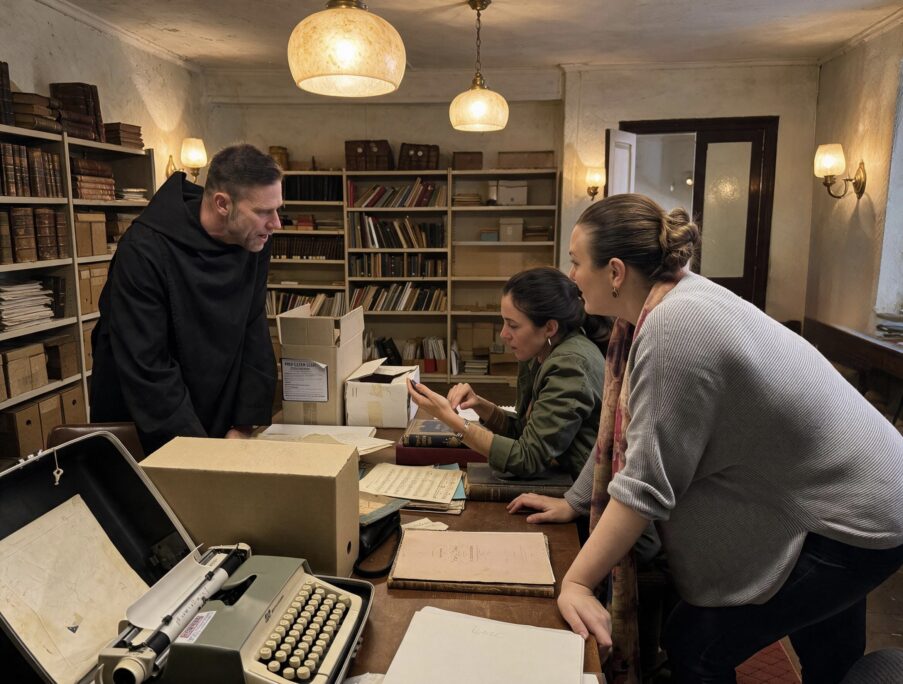
However, New Norcia also has a tradition of research and academia, with its impressive archival records and library collection, and scholars and researchers alike have delighted over the years in the information available in the town's records.
This section also provides information on the archives and library and provides link to forms which will give you access to the records of New Norcia.
Protecting a Unique Heritage
New Norcia is Australia’s only monastic town and has a unique heritage. Founded in 1847 by Spanish Benedictine Monks, the town has had many purposes; a mission, a monastery, a provider of education and now as a place of spiritual retreat.
Delve into the town's unique history, discover the ongoing and completed work necessary for the upkeep and restoration of this special part of Australia.
But it is not only the majestic buildings set amongst the Australian bush that sets New Norcia apart; its history is also encapsulated in the archival records of New Norcia and in the library and museum collections.
In this section we also have information about how you can donate to New Norcia to help the Community restore and maintain this treasure.
What's Happening at New Norcia
We hold a diverse array of events throughout the year at New Norcia.
Each year we host a full programme of events including a spiritual retreat programme presented by the Institute for Benedictine Studies, dinners at the New Norcia Hostel and a few other surprises!
Watch this space for all the updated information about "What's on at New Norcia".
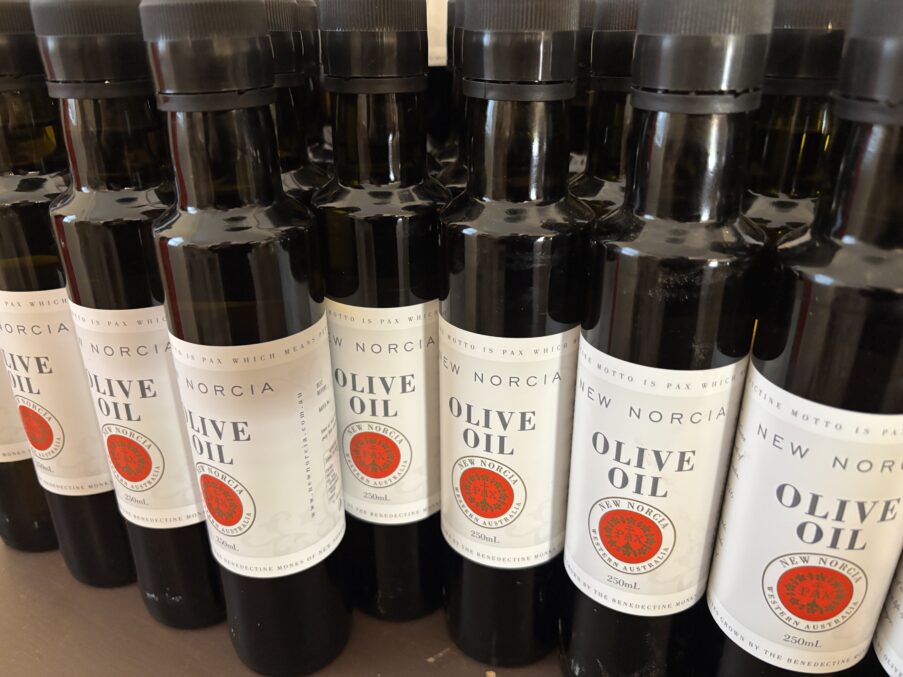
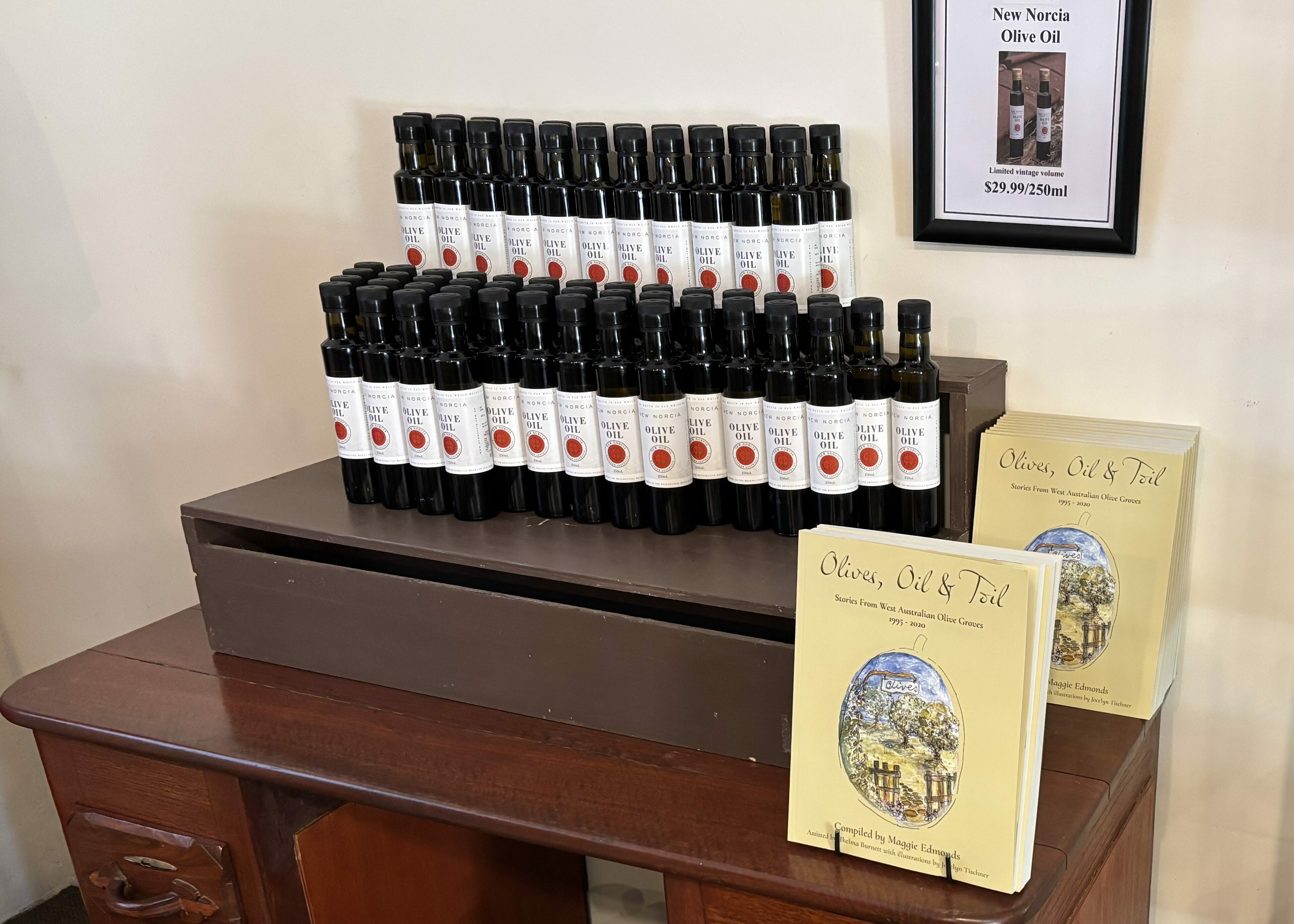
After a bumper season in the groves, New Norcia's 2026 olive oil has made its way home, and it's already proving worth the wait.
This year's harvest of some eighteen tonnes was gathered by our Grounds and Maintenance team, assisted by a crew from Mercy Care's ongoing refugee employment partnership. Dimitri, who has tended New Norcia's 700 olive trees with characteristic devotion for years, and Abbot John were delighted to finally see the season's fruit ready for bottling.
The Mercy Care partnership has become one of the quieter but more meaningful rhythms of the New Norcia year. A small crew of refugees joined our Grounds and Maintenance team for the picking, work that asks for patience and a good pair of hands, and gives something back in return: purpose, connection, and a taste of Australian rural life that few visitors ever see up close.
The process from tree to bottle is unhurried, much like everything else at New Norcia. After picking, the olives travel by road to the York Olive Oil Company for pressing, before the oil makes its way back to New Norcia to rest in the dark of the monastery cellar. There it settles in large stainless-steel containers, gradually finding its true colour and flavour, before being bottled and labelled ready for sale.
The finished oil is sent to both the Museum and Art Gallery and the Roadhouse, where regulars and passing visitors alike can take a bottle home, alongside the bread, wine and other produce that have long carried the New Norcia name.
Every bottle sold helps sustain the community that produced it.
Bon appétit!
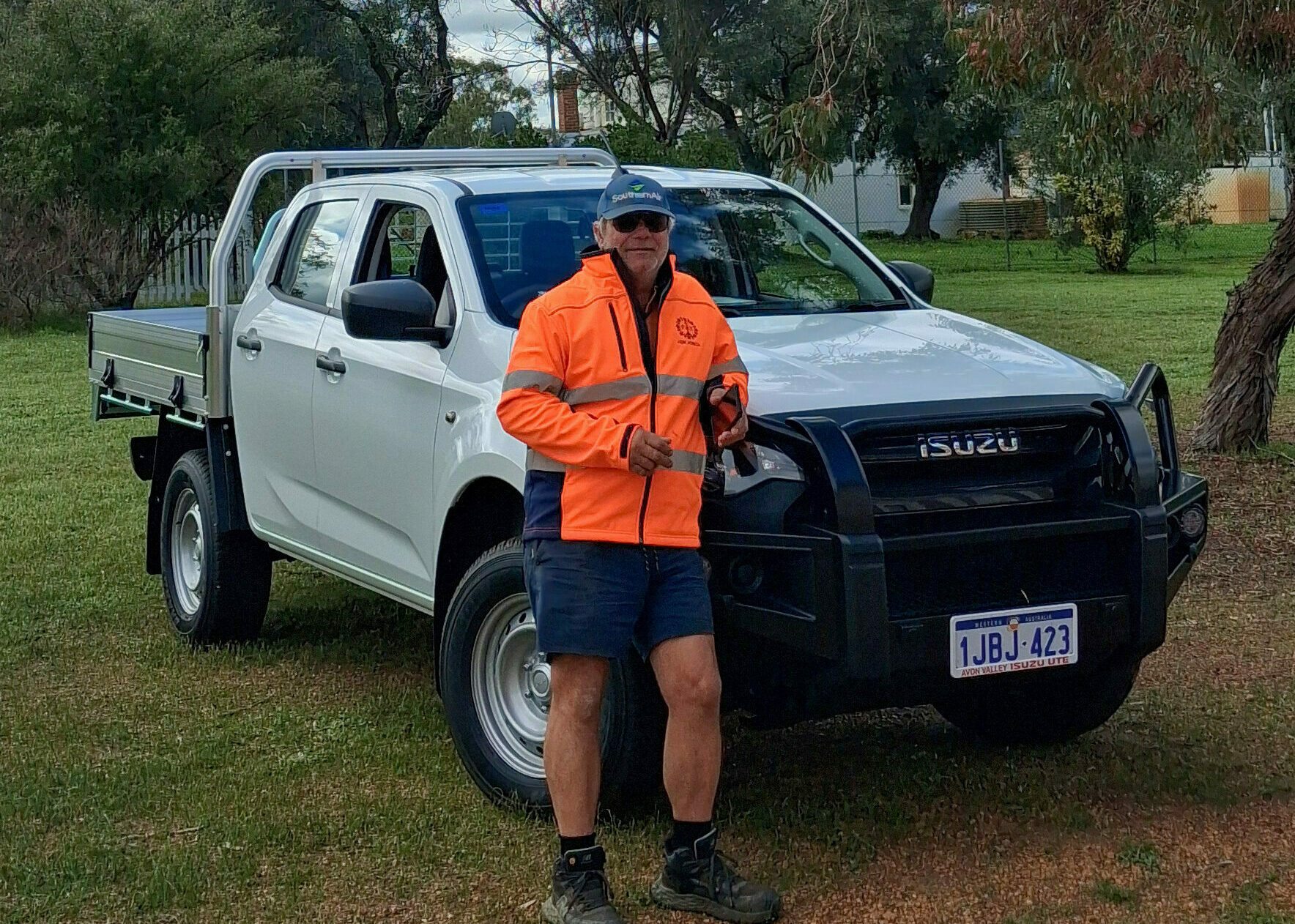
After an unfortunate accident during the olive harvest, thank God no one was hurt, the Property Manager's vehicle was written off. Nick was pleased to take possession of the replacement vehicle recently, complete with roo bar!
Music That Outlasted an Empire
Music from the New Norcia Music Archive will travel to New South Wales this September. The Far Side of Spain will find its first audience at St Michael's Church, Wollombi, as part of the Wollombi Valley Sculpture Festival, 2026.
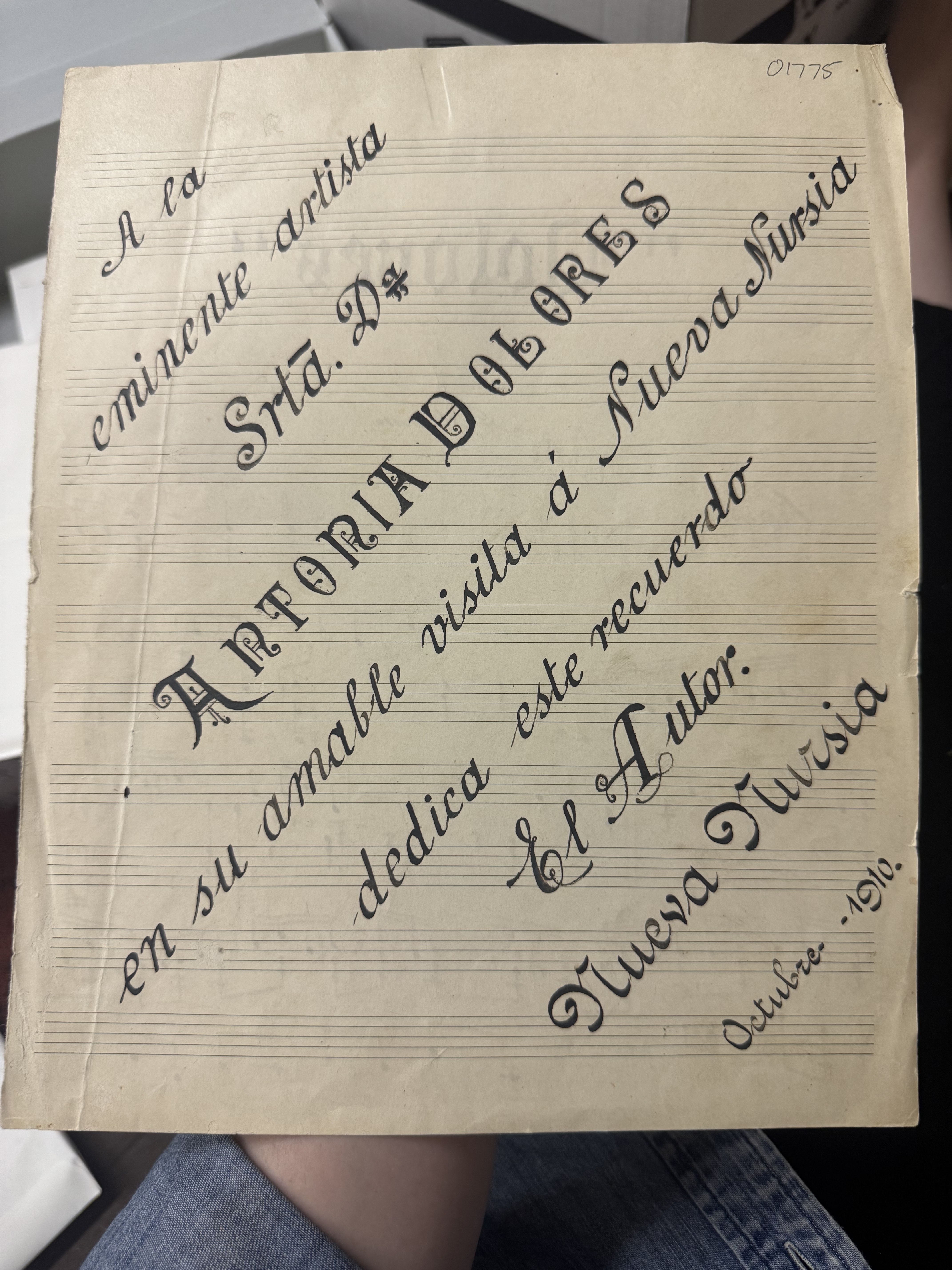
Developed by New Norcia Music Collections Curator, Allegra Giagu, with composer and bandoneonist, Owen Salomé, the programme draws on rare Spanish theatrical and vocal music—Zarzuela—preserved in the archive, together with works written by New Norcia monks from the same era.
Much of the repertoire survives from the late nineteenth and early twentieth centuries — precisely the years in which Spain's own empire was disintegrating, culminating in the loss of Cuba, Puerto Rico and the Philippines in 1898. Yet the music archive shows no sign of interruption. At the edge of a different frontier, the monks kept copying, arranging and playing this repertoire for differing voices and ensembles, even as Spain itself was forced to redefine what being Spanish now meant.
The album being developed does not attempt to recreate this music as it might once have sounded in Madrid, but rather to imagine it as it survived in Western Australia: portable, reduced in scale and shaped by the circumstances in which it was kept alive.
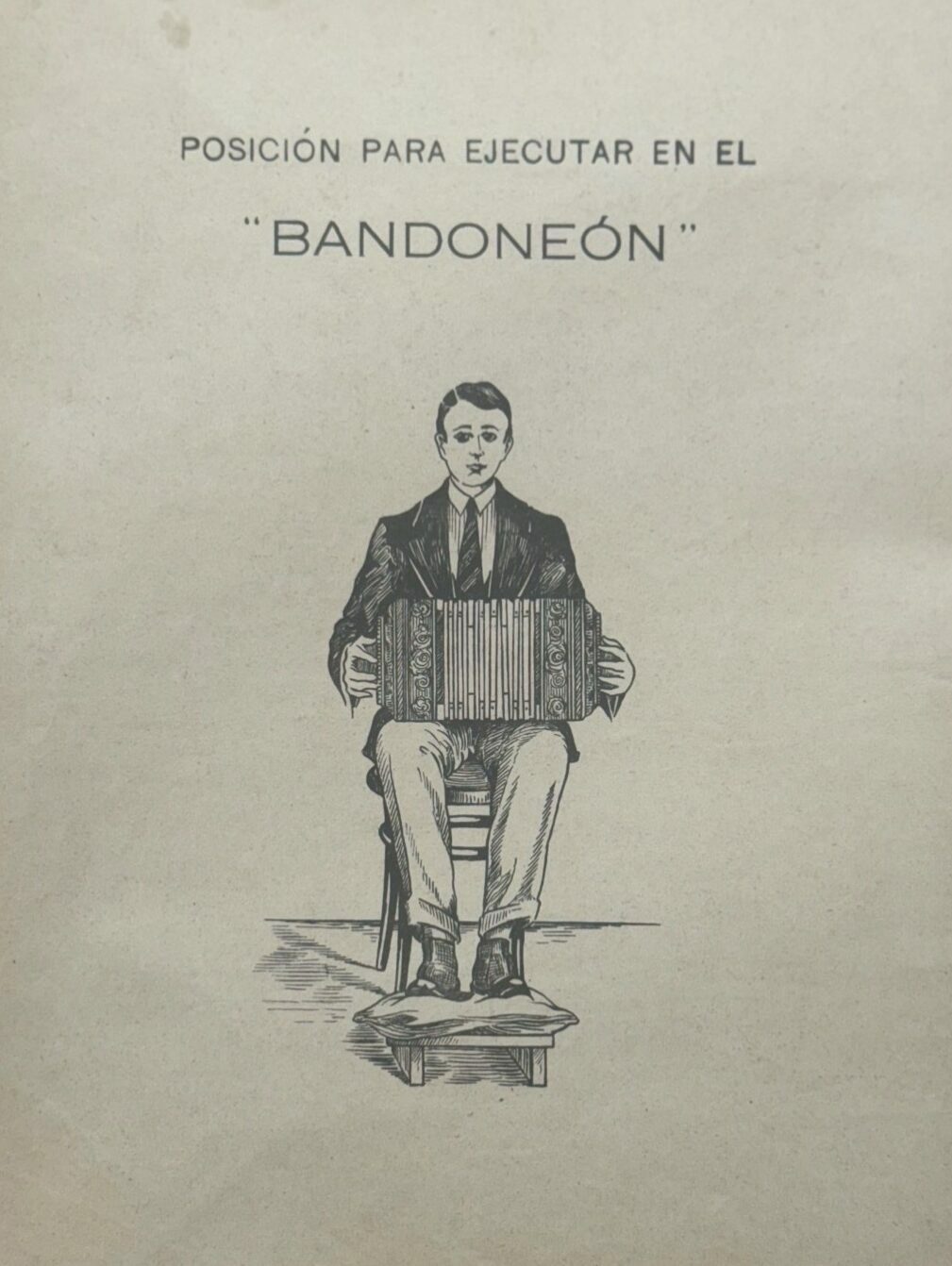
The choice of bandoneon comes directly from New Norcia. An early twentieth-century German-system ELA bandoneon is held in the Museum Collection, alongside music and instructional material from the same period. It belongs to the instrument's European history, before the bandoneon became closely associated with Argentine tango.
The ELA was likely used for sacred music as a portable alternative to an organ and could just as easily have formed part of the monastery's less formal music-making. Its exact story at New Norcia is still being researched.
Accounts survive of monks gathering on the verandah to smoke cigars and play music, while the archive contains a remarkable amount of secular repertoire. The bandoneon would have been well suited to this world: compact, expressive, capable of carrying the harmony and rhythm of a small ensemble on its own.
In the new arrangements, the bandoneon again takes the place of the absent orchestra. Voice and bellows create a sound that is intimate and mobile, closer to the conditions in which this music may have been heard at New Norcia.
Wollombi is not an accidental destination. Salvado corresponded extensively with Archbishop John Bede Polding, who laid the foundation stone of St Michael's Church. Their letters connect New Norcia and Wollombi through a shared Benedictine history.
Polding repeatedly invited Salvado to Sydney, seeking his advice on establishing peaceful missions beyond the city. The correspondence held by the New Norcia Archives, records both men grappling with the violence and injustice experienced by Aboriginal communities, although many of their ideas must also be understood within the colonial and missionary world in which they lived.
The return to Wollombi is personal, too. Allegra's parents ran the restaurant Panino in the village for more than fifteen years, and St Michael's Church was where she rehearsed each summer when she came home from London. She gave many recitals throughout the district to raise funds for community repairs, and to work with children from Laguna Primary School. The September performances close a circle that began for Allegra in that same church decades earlier.
Allegra and Fr Robert Nixon presented several secular compositions from the Monastery in a recital last year—including an amusing encore about a giant hangover—but the Wollombi performances on 18 and 19 September will be the first official public presentation of all the music being prepared for the first album.
This music, which once travelled from Spain to New Norcia by ship, is now moving again—a little quicker this time—direct from the archive and into performance and recording. The album itself will be launched at New Norcia next year, in a special event.
Newman College leavers visit New Norcia
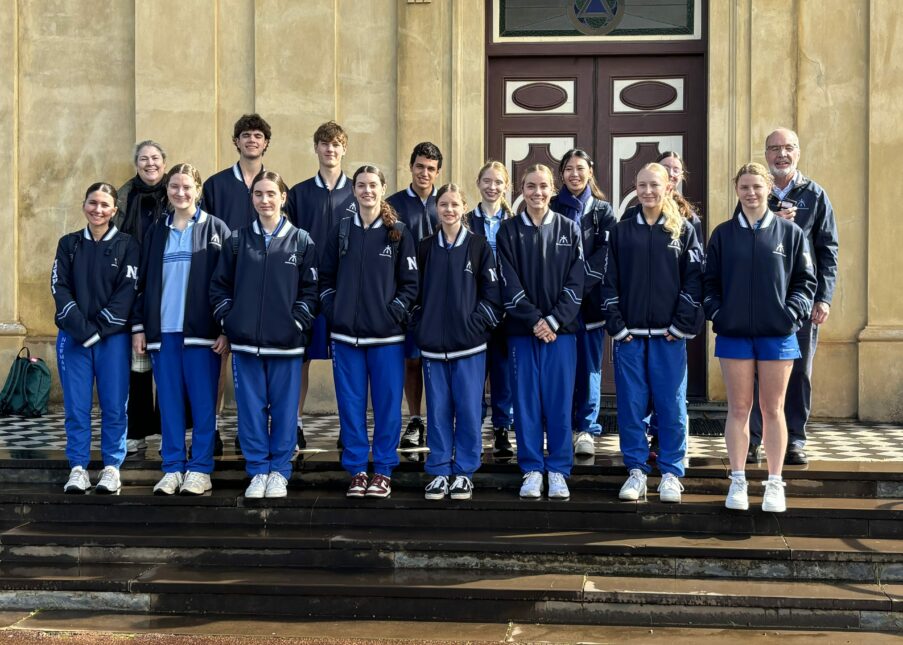
Fifteen Newman College leavers spent the first of July at New Norcia, for a day of history, music and hospitality.
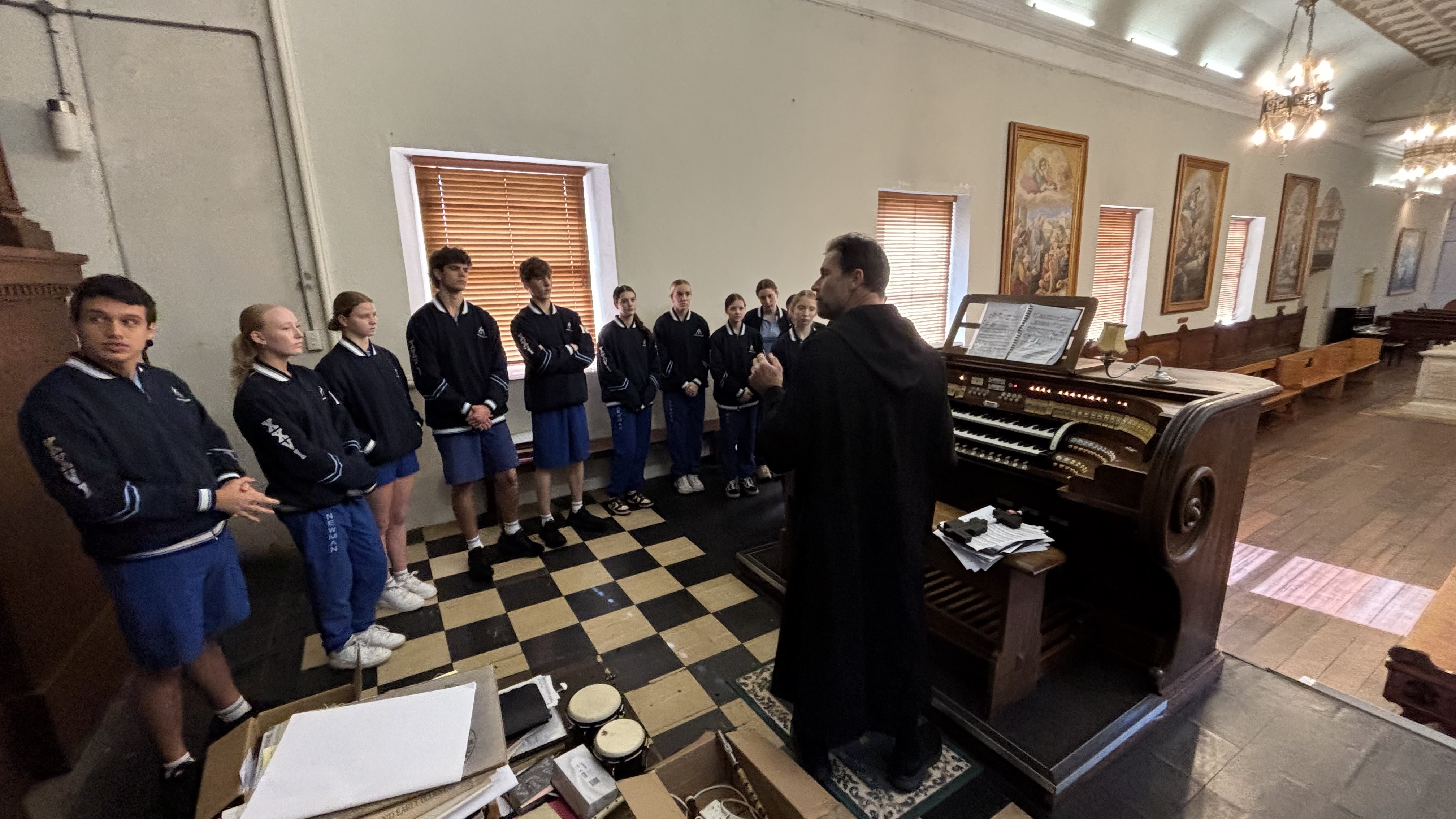
The Newman College group arrived at New Norcia for a day that carried them from lecture hall to sanctuary. Father Robert began with a talk in St Ildephonsus' College on the history of New Norcia, before they made their way to the Abbey Church for morning tea.
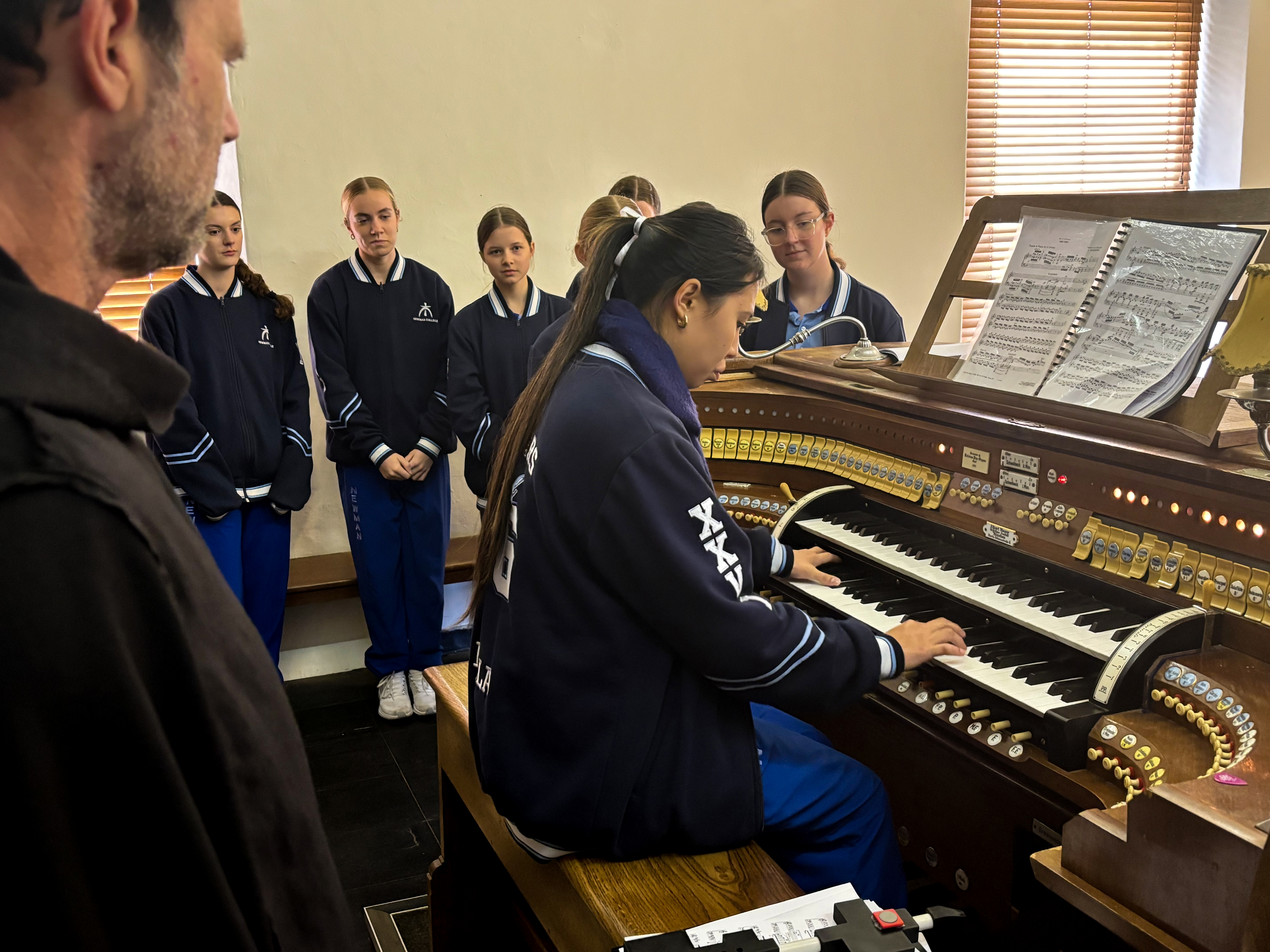
There, Father Robert introduced the students to the Moser organ and gave a demonstration of its range and voice. When he asked if anyone would like to try, one of the students stepped forward and, under his guidance, filled the church with sound, to smiles and quiet applause from her classmates.
Father Robert then presided over Mass, after which the group enjoyed a tour of the town, lunch, and a visit to the Museum and Art Gallery before returning to Perth.
Good bye and good luck
It's that time again as another round of backpackers reaches the end of their New Norcia chapter and heads off to chase down a second working visa.
Many of our backpackers are moving on, most bound for the eighty-eight days of approved regional work that earns a second working holiday visa. This month we farewelled Morgane and Alix, Leonardo and Andrea, and Lola and Yohan.
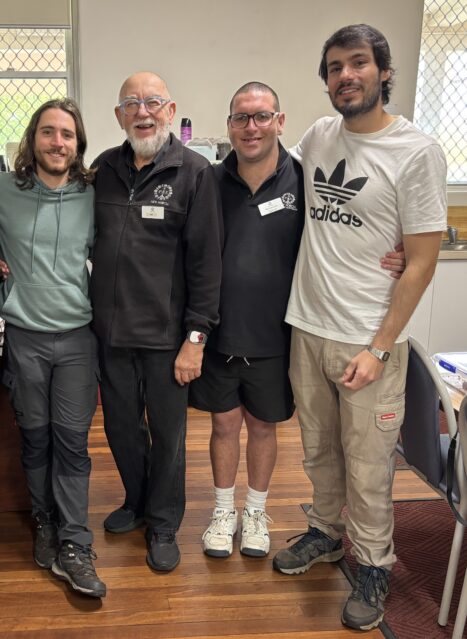
Leonardo was something of a fixture among our backpackers, turning his hand to a number of roles including tour guide. Tall, young and with an Argentinian lilt to his Spanish, he became one of our most popular guides, a favourite with visitors keen to hear New Norcia's story in his telling.
Before they left, Andrea and Leonardo dropped into the Museum and Art Gallery to say their goodbyes, pictured here with Jim and Josh Murray.
St John Ambulance visit
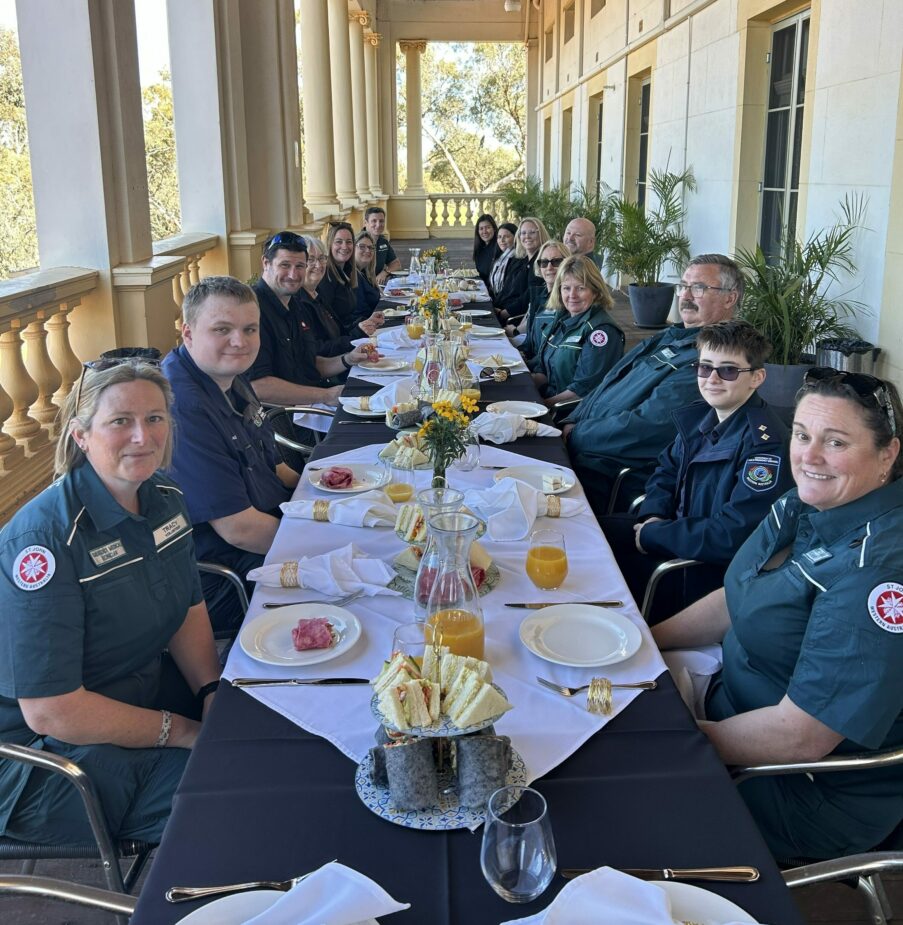
When our local St John Ambulance volunteers welcomed colleagues from Northam and Belmont, the visit became as much about friendship and hospitality as it was about emergency services.
On the 24th of July, our St John ambulance sub centre invited delegates from its Northam and Belmont offices to visit the Shire of Victoria Plains to see our facilities at both Calingiri and New Norcia and how we operate in a remote location. Our local volunteers met at Calinigri to show them the plans to extend our joint emergency services facility along with the Shire of VP staff Jack and Mikayla. We then drove them the twenty minutes to New Norcia and explained the distances we each travel to take calls, and issues we face with connectivity.
We then did a brief tour of the New Norcia facility explaining the relationship with New Norcia before taking them on an eye-opening and enthralling tour of the town. Very fortunately, as I am employed by the Community as a tour guide, this part was the easiest for me but really brought to life for our visitors the background and future of the Benedictine Community. We were both honoured and very humbled to be invited into the Monastery itself for a tour of the main room, the refectory and the very magical library. For those who have never been to New Norcia, and those that have lived here their whole lives, it’s always very special.
We then finished our tour of the training facilities that the Community allow our local volunteers to use permanently, before heading to the Hostel balcony for the greatest show of hospitality and lunch.
Both the Benedictines and St John are strikingly similar in that they are built about serving, with both dignity, compassion and humility, and community, stability and service. Our volunteers and staff express their utmost thanks to Abbot John and the extended Community for the hospitality and service shown to us all.
Tracy Sievewright, Tour Guide, Emergency Medical Technician
Studies Day 2026: Friday, 2nd October 2026
The Studies Day this year represents an exciting milestone as it will be the thirtieth Studies Day since its inauguration in 1991.
To mark this historic occasion, it has been decided to hold the event on a Friday instead of the previously customary Saturday event. This is so that librarians and archivists, as well our usual attendees, can attend a professional development day, especially now that the traditional professional development Library Day is held on alternate years following the merger of the archives and library departments.
The programme this year will include translator Judy McGuinness’ s review of the second published volume of the Santos Salvado letters (although the first, chronologically), Spain and Italy 1849-1868, together with an update on the last phase of the Santos letters; Abbot John’s news on the restoration works at New Norcia, and an audio-visual presentation from Mexico-based Sarah Connor on her work on the joint New Norcia – Perth Catholic Archdiocese project, the Bishop Griver correspondence. There will also be two musically-themed papers, one from New Norcia’s new Music Collections curator and former Abbot Placid scholar and soprano, Allegra Giagu, who will be talking about her research into Bishop Salvado’s music; the second paper will be from our current Abbot Placid scholar, Paul Watt, on Gregorian Chant. Hopefully we can persuade Allegra to give a performance!
The papers will be delivered in the stunning chapel of St Gertrude’s College with lunch in St Ildephonsus’ dining room. Morning and afternoon teas will be served in St Gertrude’s and entry to the museum and art gallery will be free to those wearing their name tags. Geoff Moor has very kindly agreed to be available again to give people a demonstration of printing techniques in the Abbey Press and print your “hot off the press” Studies Day bookmark.
Admission costs are $100 or $85 for seniors and students and they can be purchased from the web shop. Registration will be in St Gertrude’s College foyer starting at 9.00 and the first paper will be at 10.15 following Abbot John’s welcome.
Looking forward to seeing you on 2nd October!
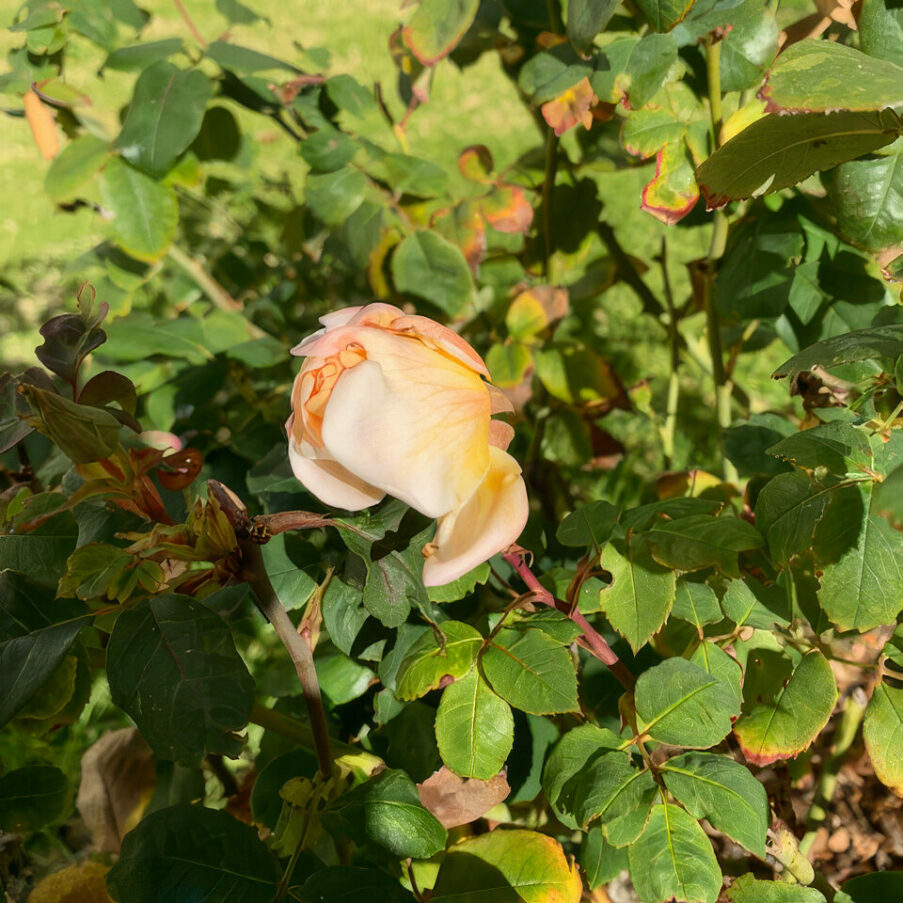
The rose garden revisited
Written by Sister Hilda
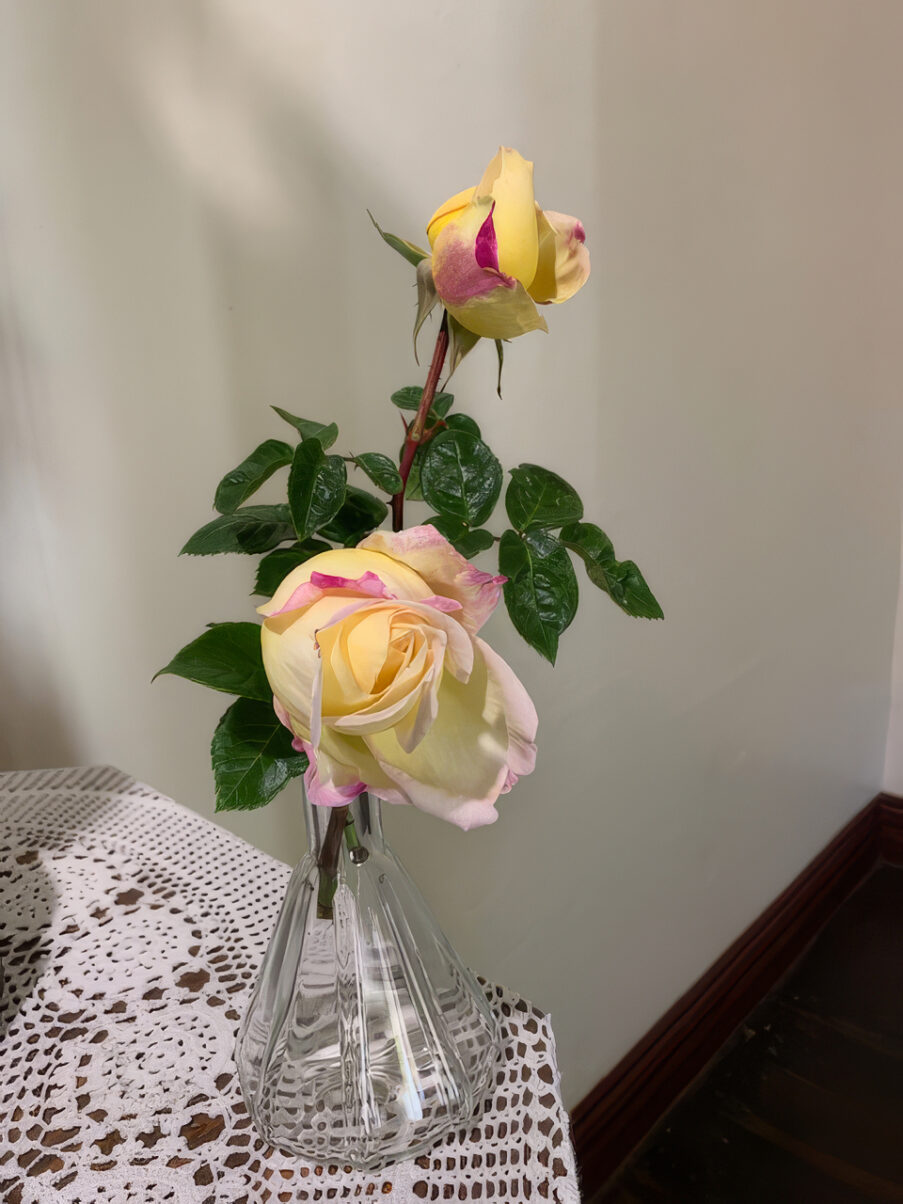
Earlier this year I penned a few thoughts around the monastery rose garden. Time has passed, a new season has emerged. I have noticed over the last couple of months that not only are there fewer roses from these usually prolific bushes, but even those that come are slow to open up and indeed some do not even do that. The colours are dull, the bushes are tired. They have given all they had and now do not have the energy to keep producing.
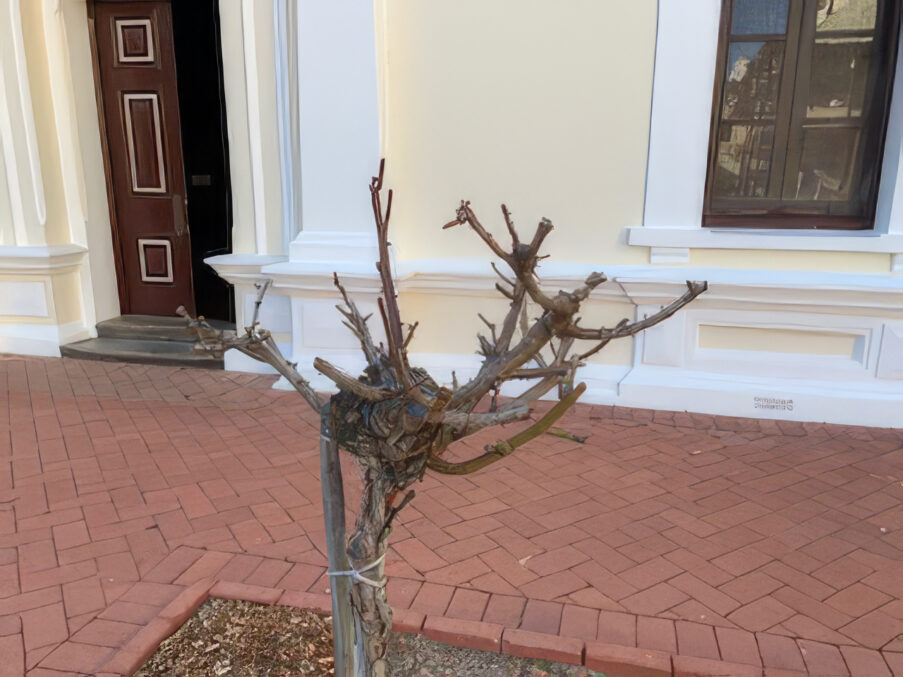
It is the inevitable pruning time. It almost seemed to me, as I began the task last week, that the bushes were grateful to be relieved of the responsibility. Grateful to have superfluous branches etc. cut away, to be back to bare basics, to be offered the chance to start again when their rose instincts and nature itself calls to them.
It made me think. How often do you and I take a photo, buy a souvenir, arrange some little keepsake, try to hang on to the special moment and, as it were, freeze it? How often do we keep a firm grasp on things, good and bad, thinking that if we let go of them, we will somehow be diminished? How often do you and I carry things beyond the “use by date”, trying to drag life out of what can no longer give us life? In so doing, how often have you and I denied ourselves the chance of the new life that instinct and God have reserved for us at the appointed time?
It will look a little bleak between now and perhaps December in the monastery rose garden, but it is far from lifeless.
Letting go, for whatever reason, is rarely easy and for a time our lives can seem very bleak indeed. Even as I write, forces are gathering to produce a new crop while the bush rests, as indeed they also are inside each of us. One day our instincts and nature in the form of God, will tell us that something new has arrived. Teilhard de Chardin, the Jesuit mystic, exhorted us to trust in the slow work of God.
Perhaps when the new roses bloom, we will see that the pruning and the wait have been worth it.
Father Robert Nixon Soirées 2026
Fr Robert Nixon's popular musical soirée series continues in 2026, with two wonderful evenings still to come.
On 3rd October, Fr Robert turns his attention to the The Baroque period (about 1600-1750) and on 5th December he closes the year with an evening of French Impressionist music — both held in New Norcia's historic hostel, accompanied by fine food and cocktails.
Tickets are available now and we encourage you to book early, as these evenings are always in high demand.
Please visit the New Norcia online giftshop to to secure your placeat the links below